


High-Throughput Single Cell Profiling of an Immunomodulator Screen in PBMCs
Overview:
This proof-of-concept screen demonstrates how scarce but biologically rich PBMC samples can be used in a scalable, single cell workflow to study complex immune responses across dozens of drug perturbations.
Key Takeaways:
- Demonstrates ability to conduct drug screening with limited, patient-derived sample inputs, starting from as few as 10,000 cells per condition and enabling >65% sample retention
- Supports high-throughput perturbation screens to study drug mechanisms of action and off-target effects at single cell resolution
- Data reveal both subtle and pronounced transcriptional responses to drug perturbation across cell subtypes
Experimental Design:
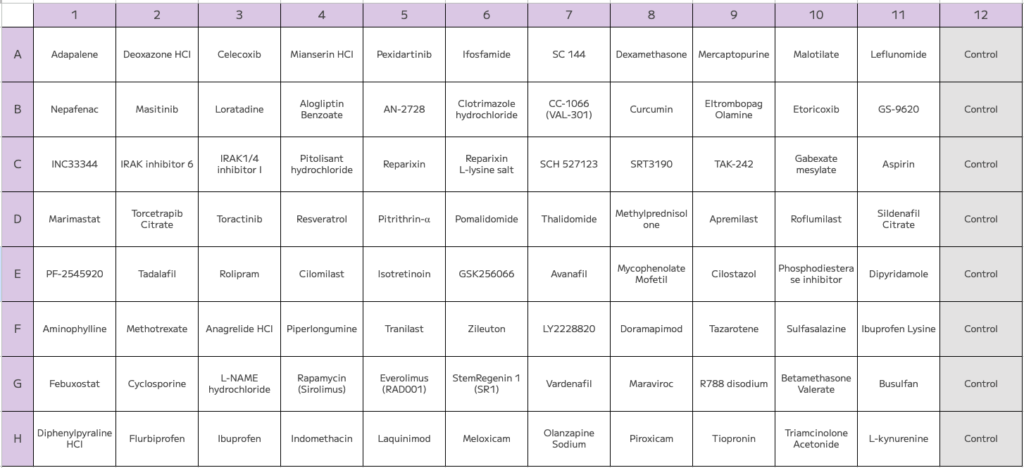
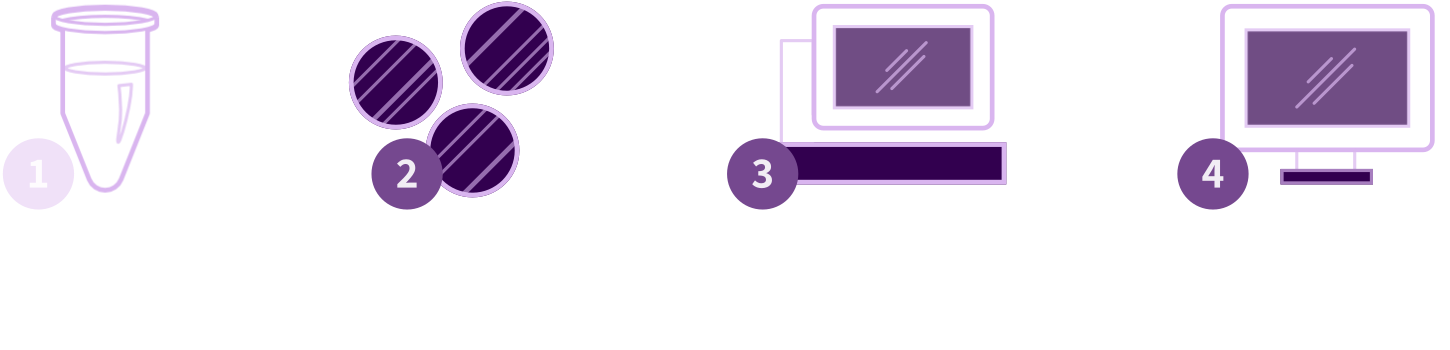
Figure 1: Workflow for Low Input Single-Cell Capture.
Cryopreserved PBMCs were thawed and recovered, then incubated with a panel of 88 immunomodulating drug compounds (plus DMSO controls) for 4 hours. Perturbed samples were then fixed using Parse Biosciences’ Evercode™ low input fixation workflow, which accommodates experiments with limited cell or nuclei material, and frozen immediately for storage until barcoding. Frozen, fixed samples were then thawed and processed using Parse Biosciences’ Evercode Whole Transcriptome combinatorial barcoding workflow. This entire workflow can be carried out using a single kit and completed by a single researcher, supporting streamlined and scalable perturbation screening even with limited resources.


Results
Immune Subtype Responses to Perturbation
Drug treatments induced distinct shifts in PBMC composition and transcriptional states. Mechanism-consistent effects were observed across PDE4 inhibitors, while glucocorticoids produced convergent signatures in classical monocytes. Select compounds, including Curcumin and Rapamycin, triggered broad remodeling of immune subsets.
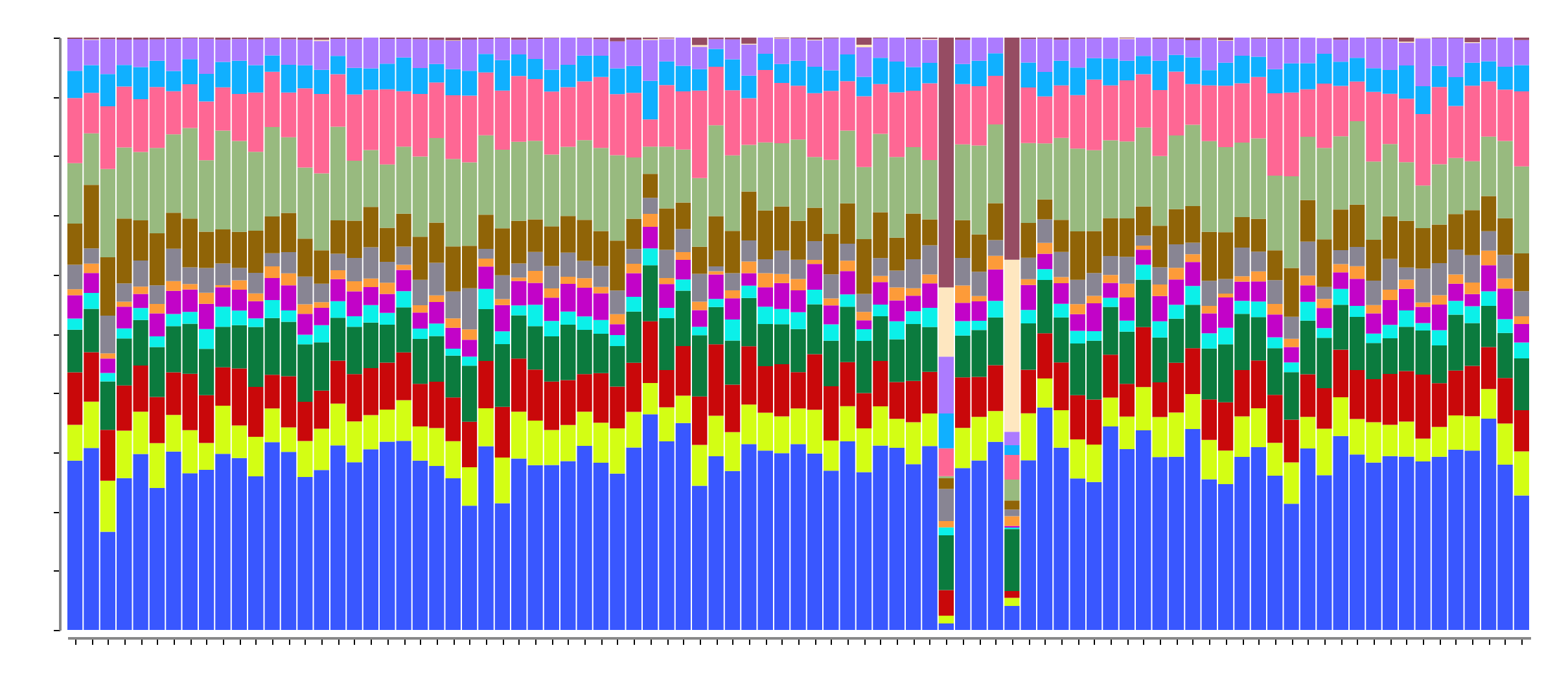 Figure 3: PBMC Subtype Responses. UMAP representation shows canonical PBMC populations and treatment-specific clusters.
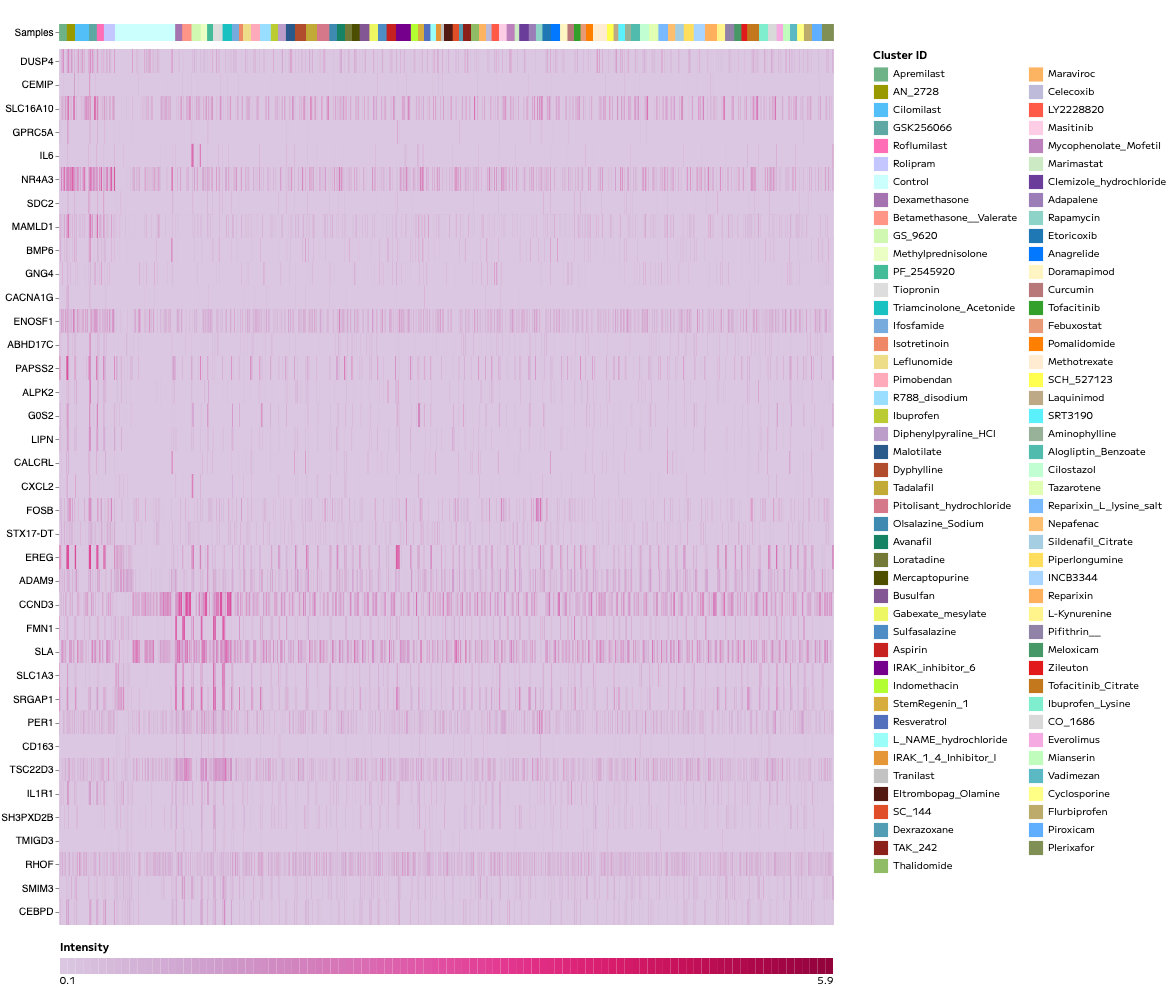
Figure 4: Divergent and Convergent Drug Effects. Representative perturbations illustrate both class-consistent and unique transcriptional responses.
This dataset highlights how low input single cell workflows enable large-scale perturbation screens in biologically relevant systems. By retaining the complexity of PBMCs, researchers can resolve mechanism-of-action signatures and detect unanticipated immune responses, insights that are not possible with homogeneous model systems.
Next steps:
- Explore the data in Trailmaker:
- Click ‘Explore’ next to the dataset “High-Throughput Single Cell Profiling of an Immunomodulator Screen in PBMCs” in the Trailmaker data repository.
- You’ll need to create a free account if you don’t already have one.
We're your partners in single cell
Reach out for a quote or for help planning your next experiment.