Have you wondered how cells function reliably and predictably despite molecular crowding and unavoidable stochastic molecular processes that cause two identical cells to behave differently?
Understanding the origin of this variability has real life consequences, as it does affect how cells respond to therapies.
 The lab of Dr. Maike Hansen at Radboud University (Netherlands) is using single cell techniques, cell-free biochemistry and computational modeling to answer these questions.
Randomness in biology happens when molecules collide or colocalize by chance. However, gene expression is governed by tight regulatory mechanisms: while some chemical reactions do happen by random collision, gene expression involves chromatin structure, regulatory proteins, feedback loops and spatial organization. This regulated variability (noise) that comes from these tight regulatory events is an intrinsic property of gene regulation. As such it drives cell fate-decision, which may obstruct treatment outcomes.
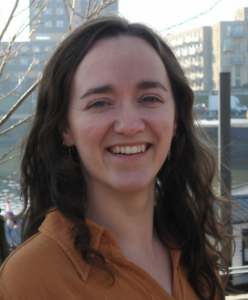
Sue van de Griendt is a PhD student in the Hansen Lab where she aims to decipher the relationship between gene expression noise and drug tolerance in cancer cells. Single cell RNA sequencing (scRNA-seq) is a crucial tool in her research.
At a high level, if you can describe the biological questions you’re interested in, how phenotypic plasticity fits into that work, and why understanding non-genetic heterogeneity is particularly important in cancer research.
The Hansen lab is interested in exploring differences in gene expression between different cells and cell populations. In my case, I look at how such difference affects drug tolerance during cancer therapy.
The scope of my PhD studies is to understand how cells can interconvert into different phenotypes, giving them an advantage during or after drug treatment. Why is non-genetic heterogeneity so important? It has been shown that if you treat a subject twice with the same drug, you can still get a response. This tells us that resistance is not only due to mutations, but that resistance can also be transient.
We think something is happening at the level of gene expression that gives cells an advantage. When the drug is removed, the population returns to their original state, giving us the chance to treat them again with the same drug.
So, we want to know why this happens and understand the mechanism behind it. This is where single cell transcriptomics play a crucial part: to resolve the individual cells within these diverse populations and decode the mechanism behind this plasticity.
When you say that you treat the cells with the drug, and notice this transient, have you noticed a time window?
Yes, that’s a good question. We are still looking into time windows, but in our experiments, we treat the cells for several days to weeks, and then we see this distinct population popping up. It is a very small percentage, usually between 0.5% and 5%, depending on the type of cancer and treatment.
The longer we let them grow or we treat them, the more cells we obtain. So the number of cells matters, because if the population is too small, we wouldn’t see it.
Is this window of transiency associated with specific drugs? Are there some drugs that create this transiency and others that do not?
Personally, I think a lot of drugs have this effect, but my research is very fundamental, not clinical. From the literature, you see retreatment response for chemotherapy and with inhibitors for example. You also see minimal residual disease in many patients with different cancer types; where after treatment, a tiny population survives that you can’t detect on scans. Those cells can potentially grow out later and cause recurrence. I think this tolerance might be related to different phenotypes occurring within a tumor; I can’t prove that, and my research does not directly address all of that.
What made single cell approaches compelling for this research question?
These populations are so small, bulk approaches would never detect them. We really need single-cell methods. Additionally, we also want a lot of information per cell. If we used microscopy for instance and only stained one gene, we would not get nearly as much information.
The beauty of this approach is that we can profile many cells and genes at the same time, which is essential for answering our question.
Within this transient population—how similar are those cells to each other? Is there heterogeneity within that group?
That is a really good question. I am still analyzing the data. Right now, I can see clear differences between our samples. I am not yet sure how heterogeneous the transient population itself is.
Why did you decide to use Parse for this project?
One of the biggest advantages was the communication with the company. We had a lot of meetings about the technique and details, and the interactions were quick and helpful. The kit was also quite easy to use, although you of course only know that after buying the kit.
I used the Linux pipeline rather than the Trailmaker setup, and even though I am not particularly good at coding, it was surprisingly straightforward. Everything was explained very well, and the first run already produced very good data, which made me really happy.
Did you batch together during- and post-treatment samples, or only post-treatment?
We did not batch them. We were limited to four samples with the smaller kits because we wanted a high cell number. We also did not treat the cells exactly as they would be treated clinically: we used a different technique to study gene expression regulation.
What advice would you give to other researchers pursuing single-cell research?
I’m still early in my PhD, but I have three tips. First, experimental design is really important. For phenotypic plasticity, you need a high cell number (ideally at least 500 cells at the end of your pipeline) because the populations you are looking for are so small.
Second, think in advance about what you want to find. Single cell data is endless, and it is easy to get overwhelmed. Having a top three list of questions really helped me.
Third, thresholds in scRNA-seq analysis can feel arbitrary. What I did was test multiple thresholds and compare the results. Seeing similar outcomes made me more confident that the results were real.
What do you see as the biggest opportunities for single cell methods in cancer research going forward?
For decades, cancer research has focused on genetics, and we have made huge progress, however, we’re not there yet. I think we need to look beyond genetics and a lot of labs are doing so! Even minor differences at the cellular level can explain differences in cellular behavior and thus patient outcomes. Now it is time to dive into those details.
Where do you see your own research on cell plasticity going in the future?
I am really focused on fundamental research. I think it would be amazing if we could identify a target and truly understand the mechanism behind it and why it affects drug treatment. If I could achieve that during my PhD, I would be incredibly happy.
It is exciting! It seems that you are discovering a population of cells that should be targets, even though no one knew they needed to be.
I indeed expect they are there, but that has to be discovered.
Best of luck Sue in all your scientific endeavors from all of us Parse Biosciences!