

It has only been two years since we met Dr. Manuela Martins-Green, at the time one of our grant winners. It was a lucky encounter as it turned out that among the many achievements and affiliations, Dr. Martins-Green is also an NIH grant reviewer and as such has a unique insight on what the NIH is looking for when approving or rejecting applications.
We interviewed her in 2023, in one of our most read blogs. She gave sound advice to young researchers, from the most crucial part of a proposal, to strategies to make it stand out.
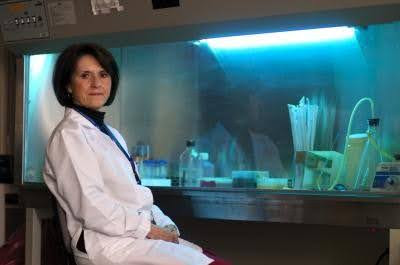
Dr. Manuela Martins-Green, PhD, is a Professor of Cell Biology & Neuroscience and a NIH grant reviewer.
A lot has happened since then, and in 2025 the NIH has announced a few policy changes impacting grant submissions and acceptance. To better understand what these changes and how (or if) they impact scientists, we went back to Dr. Martins-Green and asked her for some clarifications.
A lot has changed in the last couple of years. The NIH has introduced new funding policies to streamline the application review and awarding processes. Have these policies changed the way prospective applicants frame their research questions?
Not so much the research questions themselves, but the way proposals are written. Researchers already know their questions and their importance within the field. What’s changed is how they must convince NIH reviewers that their projects are worth funding.
Before January 2025, we evaluated proposals based on five main criteria: significance, innovation, investigator(s), approach, and environment. Since January, the NIH has simplified this into three “factors”:
- Significance and innovation (combined)
- Rigor and approach
- Investigator and institutional environment
Only Factors 1 and 2 are scored. Factor 3 is simply noted as “appropriate” or “not appropriate,” with room for brief comments if necessary. The overall impact score is derived from Factors 1 and 2.
This streamlines the writing, but the evaluation process feels largely the same to me. The key change is that significance and innovation now carry more weight than before, while the methodological details, though still important, are secondary if the research lacks strong significance or novelty.
Could you elaborate on what goes into each section?
Significance clearly defines the problem, explains its importance, and describes how the project will advance the field. It identifies what knowledge gaps the research submitted will bridge, ensuring the foundation for the work is built on rigorous prior research.
Innovation articulates the novelty of the approach. Reviewers don’t want to see repetitive studies that merely tweak well-established ideas. They want to see how the proposal moves the field forward.
The approach factor outlines strategy and methodology. Ensure your methods are solid, your team has the necessary expertise, and the design is feasible. Reviewers can tell when a proposal lacks the right expertise or methodological grounding.
It’s also vital to describe expected outcomes, potential pitfalls, and contingency plans.
Finally, demonstrate that your data analysis will be performed rigorously: reliability is essential.
It sounds like this system is designed to ensure researchers really understand their field and can’t just rely on buzzwords—or AI—to write proposals.
Exactly. Artificial Intelligence (AI) can be a wonderful tool if used properly as it helps gather and synthesize literature efficiently. But it can’t think on your behalf or develop your proposal.
We’ve seen students try to use AI-generated text, and it’s immediately obvious. The writing lacks depth and continuity.
NIH also strictly forbids reviewers to use AI in their evaluations. Reviewers must read and assess proposals themselves, as AI cannot determine significance or contextually evaluate the science.
What guidance would you offer to young investigators navigating these new policies? Do you see the policy changes as an obstacle?
Not an obstacle, just a change. Whether it’s a better system, time will tell. If I were a young investigator, I’d fully embrace it.
To succeed, young scientists need to live their science. That doesn’t mean abandoning a personal life, but their minds should constantly engage with their research. Insight often comes when you least expect it because your mind keeps processing ideas in the background.
They should also read the NIH guidelines carefully, they’re excellent. Take time to think deeply about your questions and experimental design. You can’t write a strong proposal in a month. It takes at least three months of drafting, setting aside, and revising.
Attention to detail is crucial. Inaccurate citations or superficial writing stand out immediately to reviewers. Rigorous, thoughtful, and well-supported proposals make a lasting impression.
Also, junior investigators should know that NIH takes their proposals seriously. In many study sections, we review junior PI proposals separately from senior investigators’ submissions. This allows us to evaluate their work fairly without comparison to seasoned writers.
That’s wonderful advice. Thank you so much for sharing your insights.
Dr. Manuela Martins-Green is a professor of Cell Biology in the Department of Molecular, Cell and Systems Biology at the University of California, Riverside.
One of her recent papers compares the gene expression of chronic and non-chronic wound at the single cell level with Parse Evercode. The research describes the role of different cell types in the initiation of chronic wound and uncovers that initiation of chronicity is multifactorial, and can happen early after the injury, suggesting that only one standard of care may not be enough to achieve healing.