


Whole Transcriptome Discovery From Archived Tissue
Evercode MAX WT FFPE profiles cell types and gene expression in archived FFPE samples, using reverse transcription (RT) to capture RNA beyond a predefined gene list.
More of What You Want, Less of What You Spend
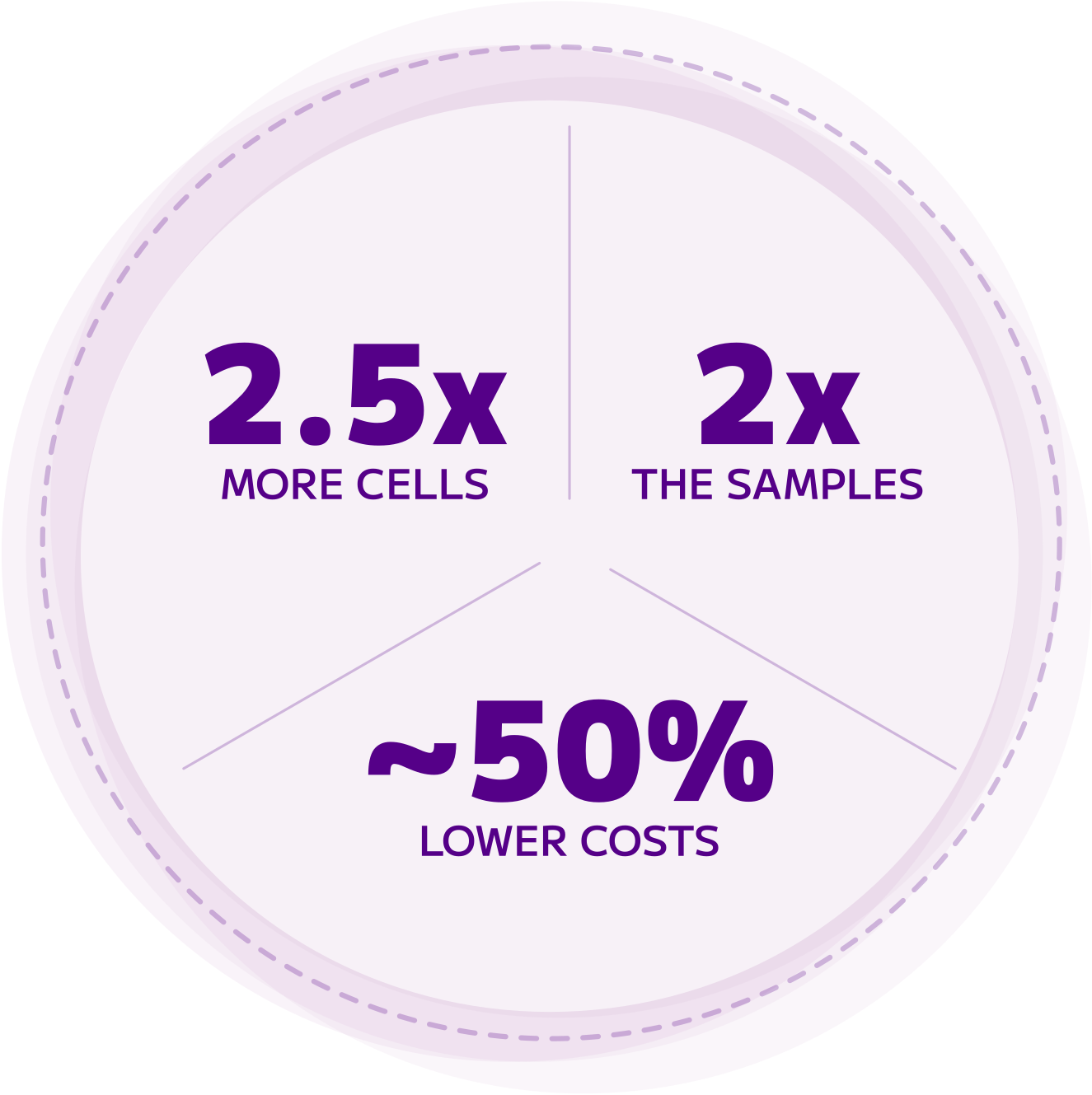
Go bigger with your existing budget – MAX enables profiling of up to 2.5x more cells across up to 2x more samples with the same instrument-free workflow and lower cost per sample and cell.
Discover More Biology With Evercode MAX
Evercode MAX WT FFPE brings Evercode whole transcriptome profiling to archived tissue, using reverse transcription to capture RNA beyond a predefined gene list. As the next evolution of this technology for FFPE samples, Evercode MAX WT FFPE opens a broader view of the biology preserved in preserved tissue.
High-Fidelity Transcriptomic
Data From FFPE Samples
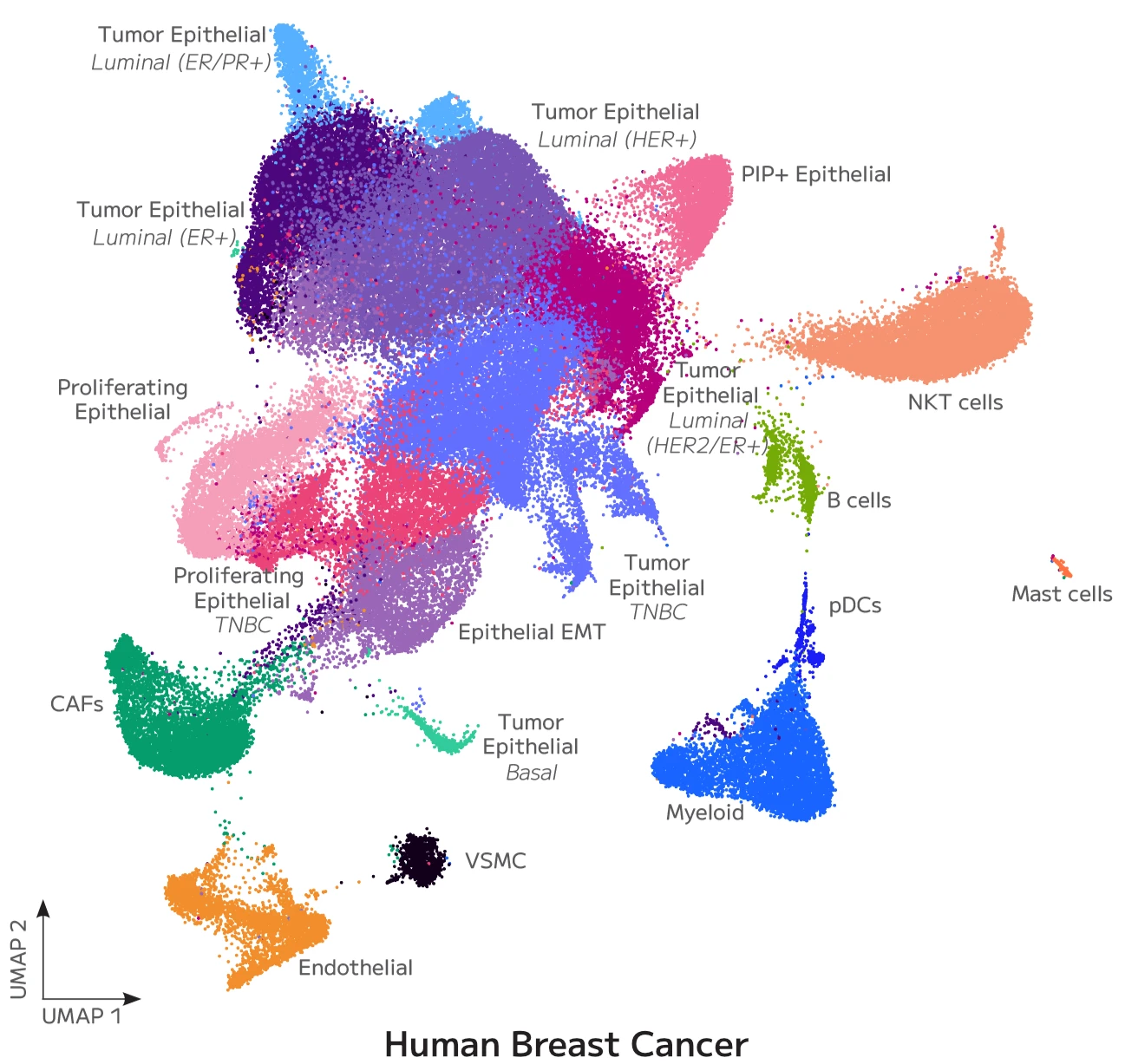
Accurate gene expression measurements from FFPE tissue help you identify cell states and compare results with fresh tissue datasets.
Unbiased Whole
Transcriptome Profiling
Whole transcriptome profiling captures transcript diversity, including isoforms, SNPs, and lncRNAs, without limiting discovery to a predefined target panel.
Maximize Scale
on Your Terms
Evercode MAX WT FFPE kits match your sample count and nuclei per sample, supporting consistent whole transcriptome profiling from pilot studies to retrospective cohorts.
Instrument-Free,
Automation-Compatible
The workflow runs with standard laboratory equipment or compatible automation, supporting use across labs and collection sites.
Configure MAX
Around Your Study
The product finder uses your tissue types, sample count, and target nuclei per sample to identify options for your FFPE study.
Size Your Next Single Cell Experiment.
We’ll give you an instant quote on how much it may cost to run your experiment.
Whole Transcriptome Discovery Beyond a Gene Panel
Evercode MAX WT FFPE profiles gene expression beyond a predefined gene list, including long non-coding RNAs with regulatory roles that targeted approaches may miss. This lets you investigate cell types, states, and potential mechanisms in archived tissue without selecting your genes of interest in advance.
Cell Type–Specific lncRNA
Patterns in FFPE Breast Cancer
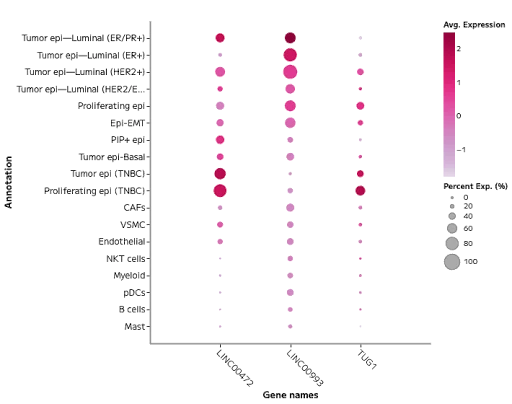
Long non-coding RNA expression across breast cancer cell populations profiled with Evercode WT FFPE. TUG1 is elevated in TNBC and proliferating epithelial populations, while LINC00993 is enriched in luminal epithelial populations. These cell type expression patterns can help identify regulatory programs for further investigation.
Sample Multiplexing for Cohort Studies
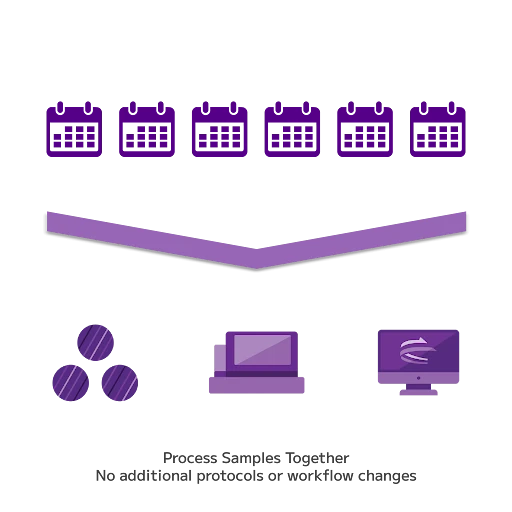
Built-in sample multiplexing brings archived samples from different donors, conditions, or timepoints into one experiment. Processing samples together helps reduce technical variation between runs, supporting comparisons of biological differences without a separate sample multiplexing protocol.
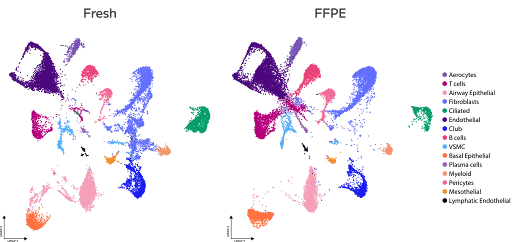
Reliable Gene Expression From FFPE Tissue
Reliable gene expression measurements from archived tissue help you identify cell types and distinguish cell states. Evercode MAX WT FFPE also supports comparison with fresh tissue datasets, helping you connect findings across sample collections.
Fresh vs. FFPE Cell
Population Annotation
Annotated cell populations in fresh and FFPE samples. FFPE data generated with Evercode WT FFPE.
Single Cell Discovery From Archived Tissue
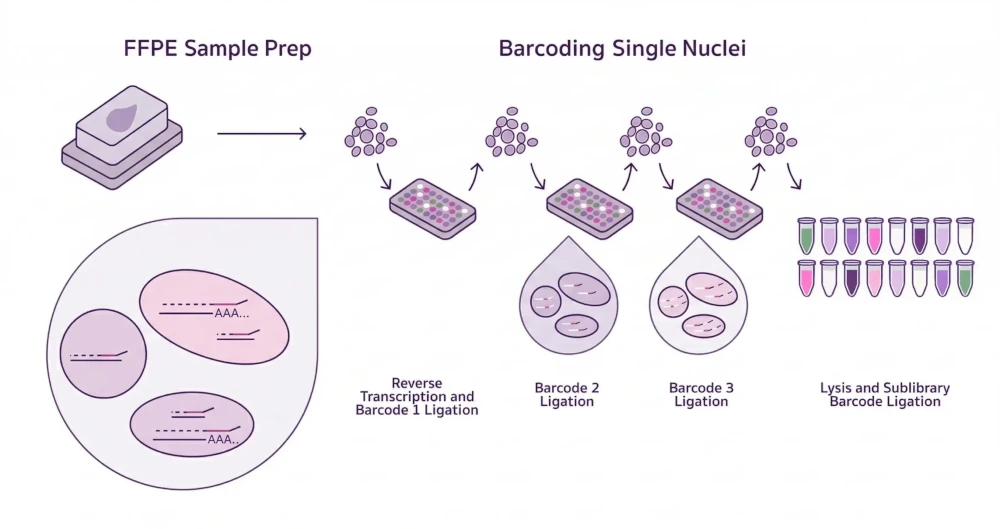
Evercode MAX WT FFPE brings archived tissue into single cell studies through a workflow that uses standard laboratory equipment. Prepared nuclei can be stored and processed together, giving researchers flexibility to plan studies across sample collections.
Nuclei are isolated from archived FFPE tissue, then processed through barcoding, library preparation, sequencing, and analysis to generate single cell gene expression data.
Frequently Asked Questions
 Can I Perform Single Cell RNA Sequencing on FFPE Tissue?
Does Evercode MAX WT FFPE Require a Predefined Gene Panel?
How Does Evercode MAX WT FFPE Profile Fragmented RNA?
What FFPE Tissue Can I Use for Single Cell RNA Sequencing?
Can I Save Unused Evercode MAX FFPE WT Library Prep Reactions?
How Many FFPE Samples and Cells Can I Include in My Single Cell Study?
What Single Cell RNA Sequencing Data From FFPE Tissue Can I Explore?
How Much Does Evercode MAX WT FFPE Cost?