

製品

Profile archived FFPE tissue using reverse transcription chemistry to enable discovery-driven snRNA-seq at cohort-scale, unlocking retrospective cohorts that are not accessible with fresh tissue alone.
Cells
Samples
Existing FFPE single cell methods rely on targeted probe panels, limiting analysis to predefined genes.
Evercode WT FFPE uses reverse transcription-based chemistry to capture the full transcriptome, enabling unbiased discovery from archived tissue and unlocking transcriptomic features that targeted panels cannot capture.
Enables accurate measurement of gene expression from FFPE samples, supporting reliable identification of cell states and integration with data from fresh tissue.
Captures full transcriptomic complexity, including the breadth of transcript diversity and key regulatory transcripts such as isoforms, SNPs, and lncRNAs, enabling discovery rather than targeted confirmation.
Supports cohort-scale studies with sufficient statistical power, enabling robust experimental design and high-throughput data generation.
Enables easy adoption and seamless scale-up, supporting both standard and automated workflows across labs and sites.
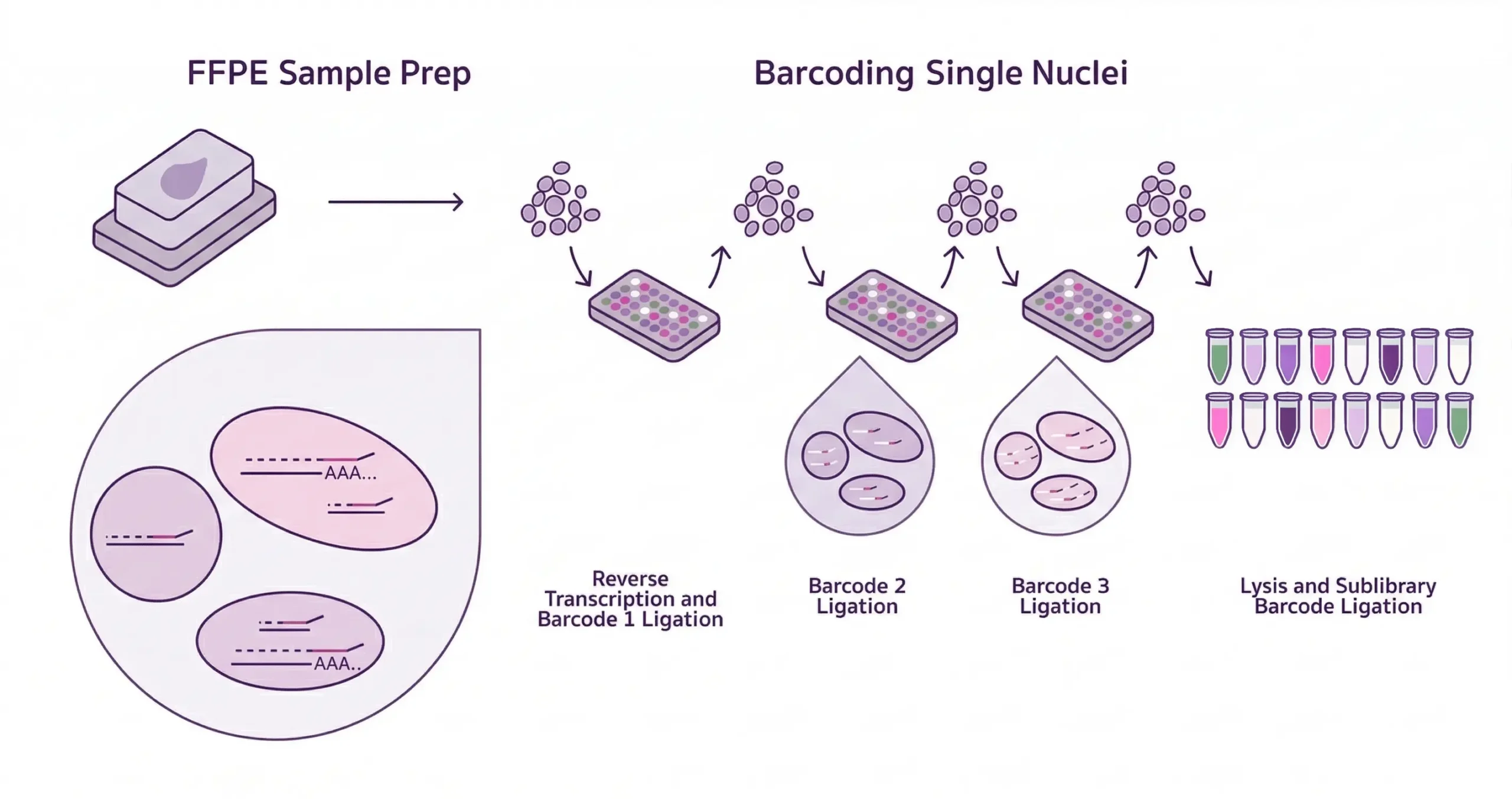
Evercode WT FFPE captures RNA directly from FFPE samples, avoiding reliance on predefined gene panels.
This enables whole transcriptome single cell RNA sequencing from archived tissue, supporting analysis of transcript diversity and regulatory RNA species across cohorts. Meaningful biological differences between samples and conditions can be identified without restricting analysis to a fixed set of probes.
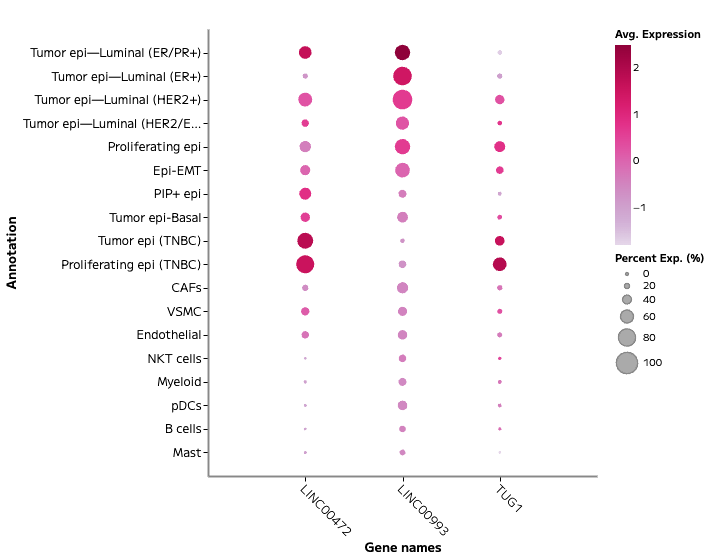
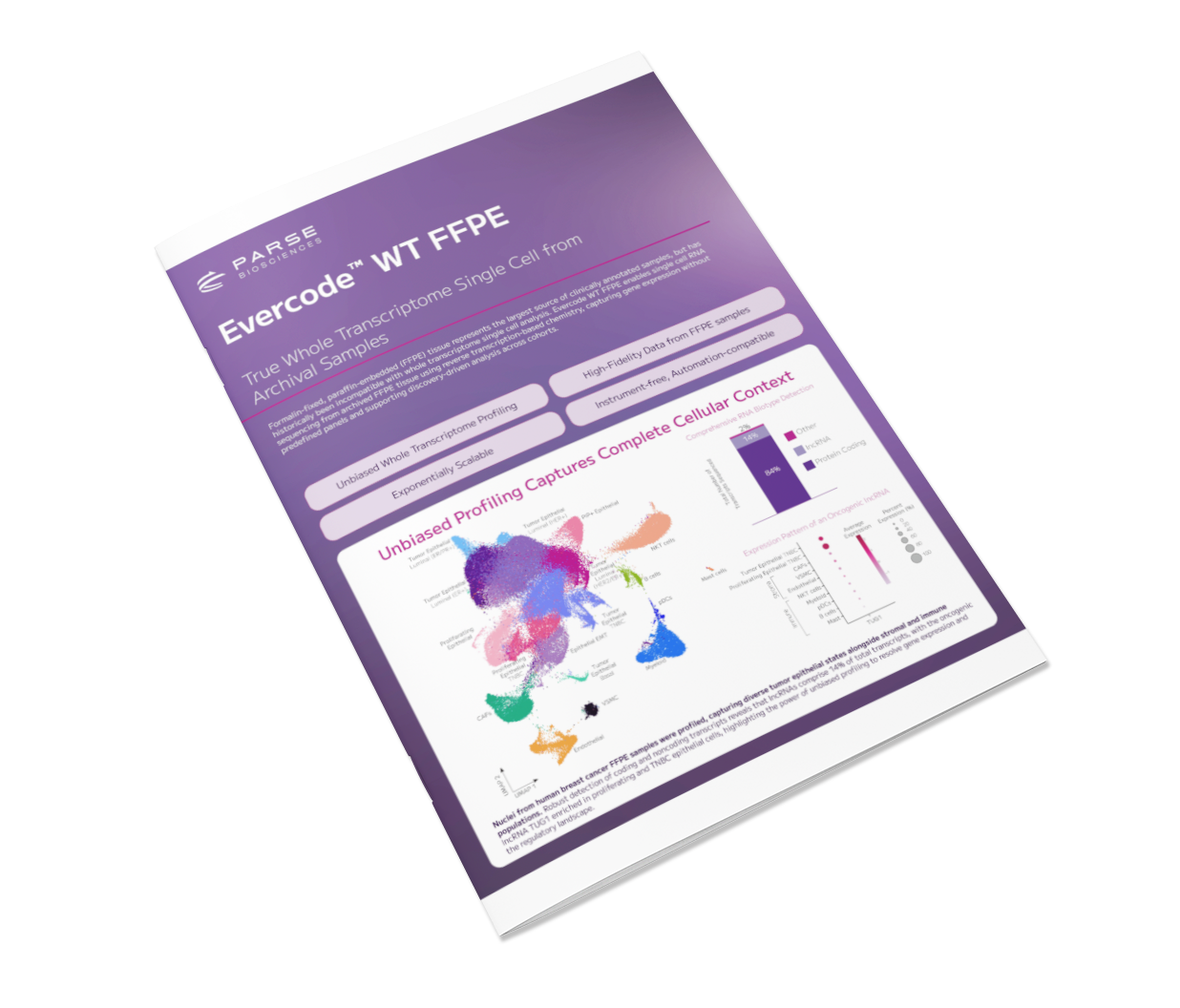
Dot plots show expression of TUG1, LINC00993, and LINC00472 across annotated cell populations. Proliferating TNBC tumor epithelial cells exhibit elevated TUG1 alongside variable expression of tumor-suppressive lncRNAs, reflecting the complex regulatory environment across breast cancer subtypes.
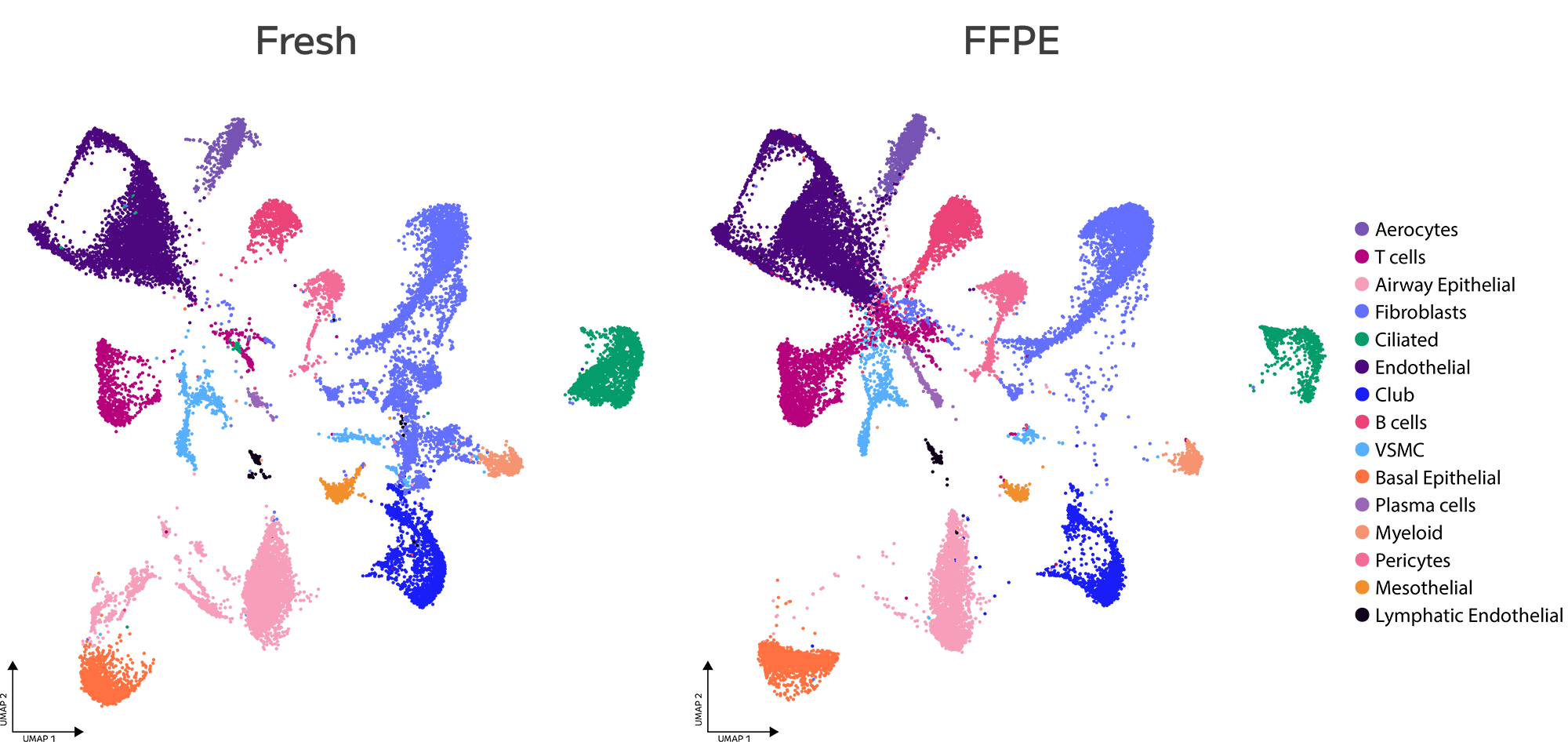
Degraded RNA has historically limited the accuracy of gene expression measurements in FFPE samples. Evercode WT FFPE uses reverse transcription chemistry optimized for fragmented RNA, enabling consistent gene expression detection and confident identification of cell states. The resulting data support direct comparison with fresh tissue datasets, preserving biological signal across fresh and FFPE preserved samples.
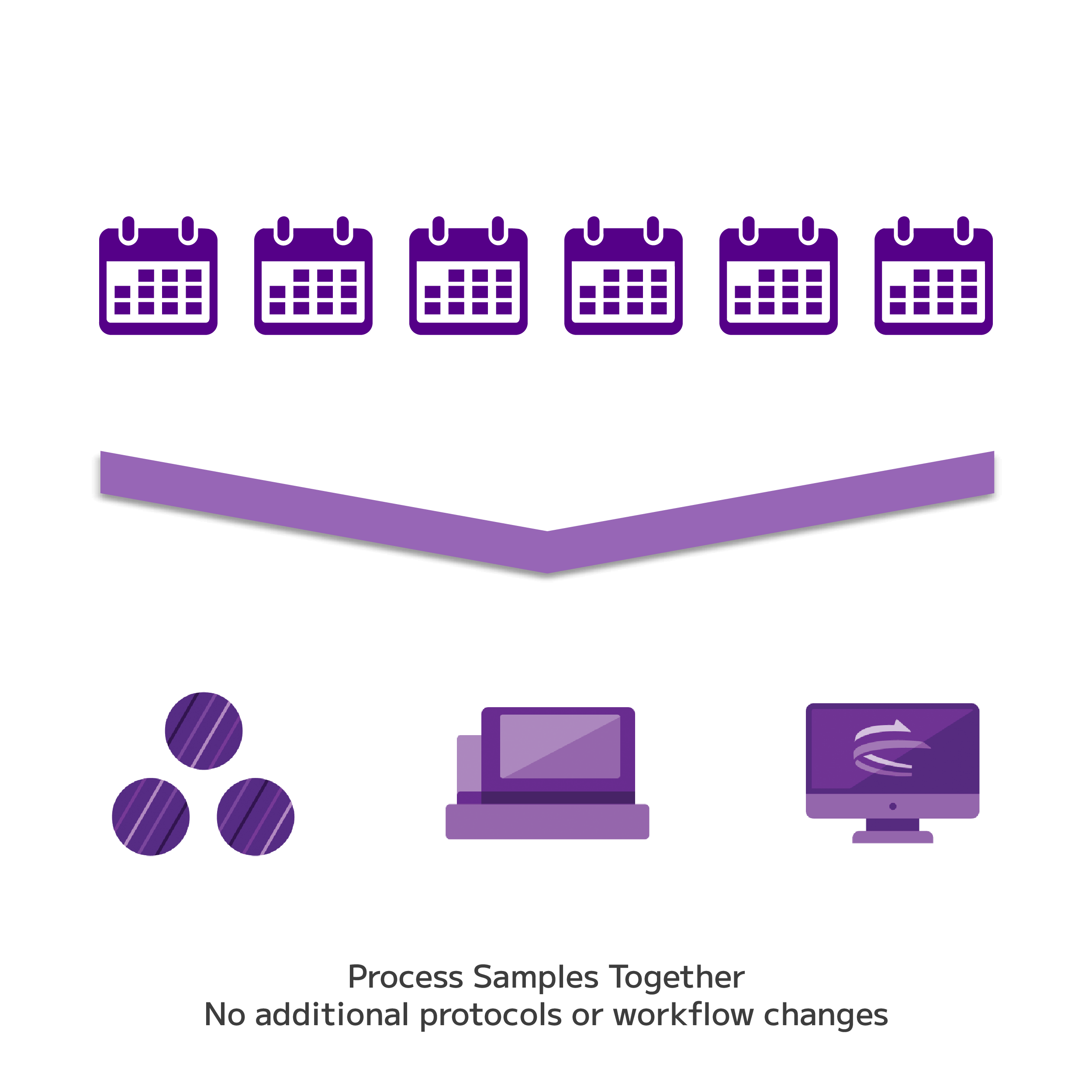
Combinatorial barcoding enables multiplexing of large sample sets within a single experiment, allowing entire cohorts to be processed together in one run. Multiplexing is built into the workflow and does not require additional steps or protocols.
This approach minimizes technical variability and supports cohort-scale study design with sufficient statistical power. The result is large, discovery-driven studies across archived clinical samples with greater scale and flexibility than traditional FFPE approaches.
Reach out for a quote or for help planning your next experiment.